Sustainability
Greener by design: How smart buildings are transforming sustainability and ESG performance
Energy efficiency and ESG compliance are vital in modern workspaces, and smart building systems are making it easier than ever to stay up to code.

What makes a building genuinely sustainable in this day and age, and how can technology prove it? Smart buildings have become one of the most powerful levers for hitting real sustainability and ESG targets. Using IoT, AI, and an integrated operating system to track every kilowatt, litre, and CO₂molecule, smart building systems automatically optimise your building’s performance and generate ESG-ready data in an instant.
In this guide, you’ll see how sustainable smart buildings work, why they matter for landlords, facilities managers, and tenants, and where a platform like Smart Core fits into delivering greener, more accountable assets.
What is a sustainable smart building?
A sustainable smart building is a digitally enabled asset that continuously reduces energy, water, and carbon while protecting occupant wellbeing and meeting ESG obligations. It does this by combining IoT sensors, AI analytics, and automated controls into one coordinated system that can monitor, optimise, and report performance in real time.
Instead of treating sustainability as a one-off design choice, sustainable smart buildings make it a living process: they measure what is happening, act on it automatically, and generate the data needed for audits, certifications, and investor reporting.
How do sustainability and ESG fit together for buildings?
Sustainability describes how a building uses resources and impacts the environment over its life, while ESG provides the framework investors, regulators, and boards use to evaluate that impact. In practice, smart buildings help real estate owners and operators perform across all three ESG pillars:
Environmental: Energy efficiency, emissions reduction, water conservation, waste minimisation, and support for renewables
Social: Healthy, safe, comfortable indoor environments that support wellbeing, accessibility, and modern ways of working
Governance: Reliable data, transparent reporting, and demonstrable compliance with standards, regulations, and internal policies
For landlords, facilities managers, and tenants, the key is being able to prove performance with evidence, not just policy statements. That is where a unified digital layer such as a building operating system becomes critical.

How do smart buildings actually cut energy and carbon?
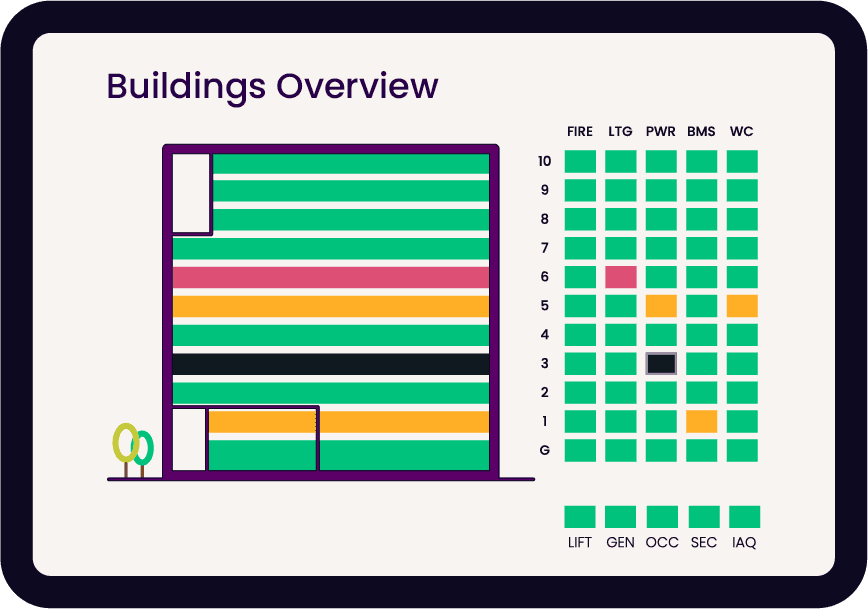
Smart buildings reduce energy use and emissions by matching consumption much more closely to real demand. They use networks of sensors to track temperature, occupancy, air quality, lighting levels, and equipment behaviour, then feed that data into a central platform that can adjust systems automatically.
Typical energy- and carbon-saving capabilities include:
Turning down or switching off HVAC and lighting in unoccupied or low-priority spaces
Preventing over-cooling and overheating with more precise, zoned control
Shifting non-critical loads to off-peak periods or lower-carbon grid windows
Participating in demand response to help stabilise the grid and earn incentives
By layering in forecasting and optimisation, AI can look ahead at weather, tariffs, and usage patterns to keep consumption as low and as clean as possible without compromising comfort.
What technologies make buildings “intelligently” sustainable?
There are three main technology layers that work together to deliver sustainable performance:
IoT sensors and meters: Provide the ground truth on electricity use, gas, water, indoor air quality, occupancy, and equipment status
AI and analytics: Analyse patterns, detect anomalies, predict demand, and recommend or trigger actions such as setpoint changes, maintenance tickets, or load shifting
Control and automation: Building management systems, smart devices, and a building operating system that can actually implement changes across HVAC, lighting, renewables, EV chargers, and more
In a commercial setting, this stack typically sits on top of existing plant and systems, unifying them so they behave like one coordinated, software-defined building rather than a collection of disconnected assets.
How do smart buildings support renewables, EVs and the wider grid?
Modern sustainable buildings are not just efficient consumers; they are active participants in the energy ecosystem. When equipped with the right digital infrastructure, they can:
Integrate on-site solar and other renewables, forecasting generation and deciding when to store, consume, or export
Optimise battery storage to reduce peak demand, manage tariffs, and provide backup or resilience
Coordinate EV charging so it happens at the right times, at the right speeds, and in harmony with both the building’s load and the grid’s constraints
This turns the building into a flexible, responsive asset that can move closer to net-zero operation while supporting grid stability and electrification goals.

How do smart buildings reduce water use and waste?
Water and waste often receive less attention than energy, but they are significant sustainability levers. Smart buildings improve performance by:
Monitoring water flows and tank levels in real time to identify leaks and abnormal patterns
Automating irrigation, flushing, and other water-intensive processes based on weather, occupancy, or schedule
Tracking waste streams and container fill levels, supporting more efficient collections and better recycling performance
By surfacing issues instantly and showing trends over time, the same data and automation patterns used for energy can be applied to other resource domains.

How do smart buildings improve indoor environmental quality and wellbeing?
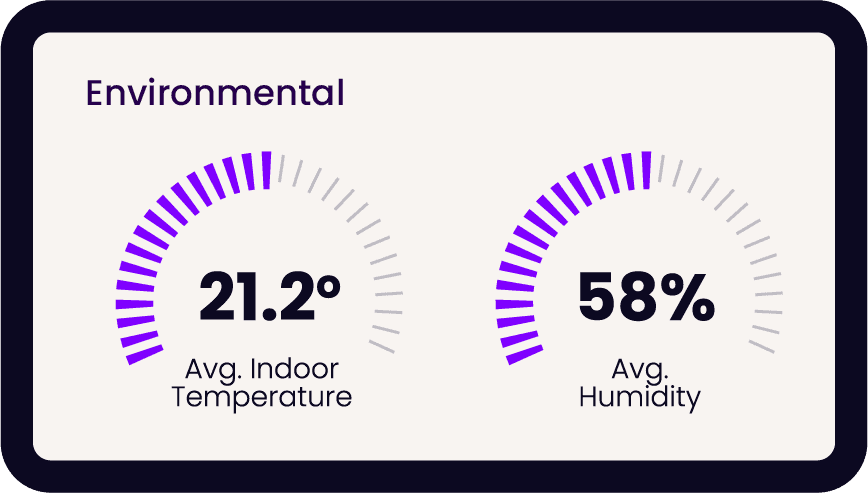
The “social” side of ESG is largely experienced by occupants, and smart buildings can have a direct, measurable impact here. With the right sensors and controls in place, a building can:
Maintain healthy CO₂ and pollutant levels through responsive ventilation
Adjust lighting and temperature according to occupancy, time of day, and space type
Support different working patterns and preferences with flexible zones and user controls
This leads to more comfortable, productive environments, lower complaints, and a stronger tenant value proposition-especially in competitive office markets.

How do smart buildings make ESG reporting easier and more credible?
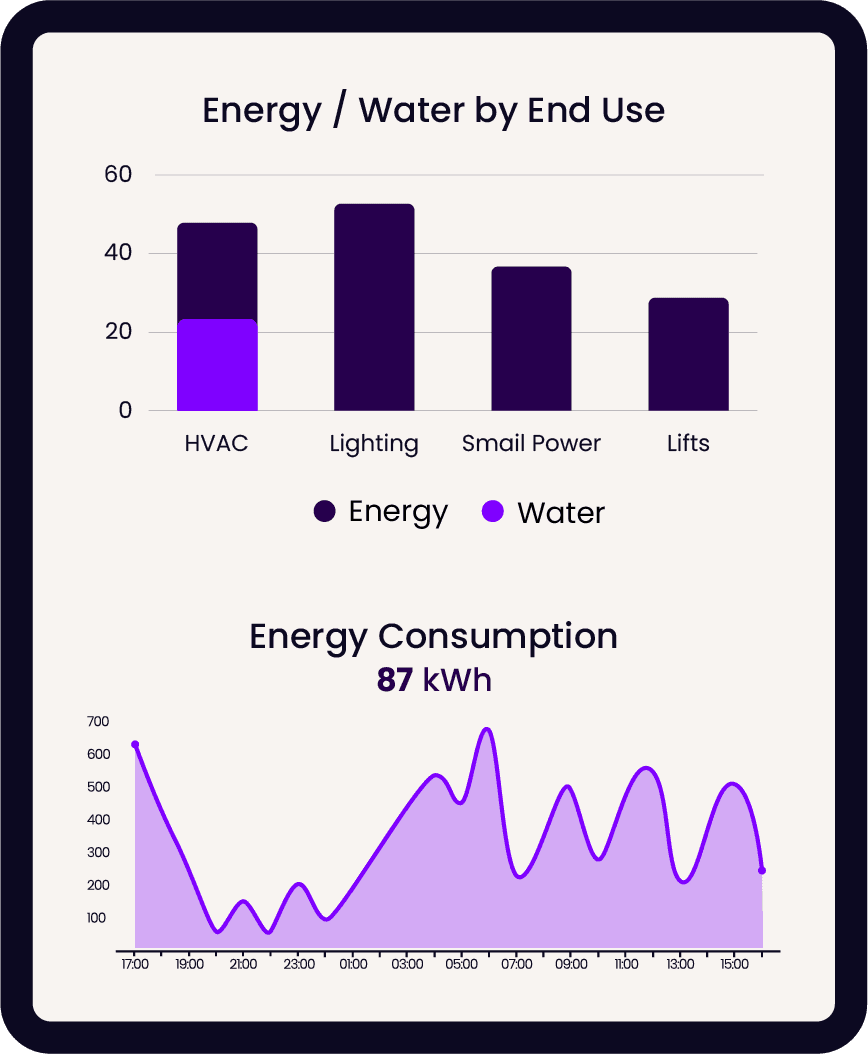
One of the hardest aspects of ESG is assembling accurate, auditable data across a portfolio. Smart buildings simplify this by collecting performance information digitally at source and making it available through dashboards and automated exports.
A well-instrumented building can provide:
Consistent, time-stamped energy, water, and emissions data at building, floor, or tenant level
Historical records that support year-on-year comparisons and trend analysis
Evidence to underpin certifications and regulatory submissions, with clear traceability back to systems and meters
This reduces manual data collection, cuts the risk of errors, and increases trust among investors, regulators, and occupants.

What is the business case for sustainable smart buildings?
Sustainable smart buildings deliver a combination of financial, operational, and reputational benefits that go beyond compliance:
Lower operating costs through reduced energy and water use, fewer reactive repairs, and better use of maintenance resources
Higher asset value and resilience as markets increasingly price in ESG performance and transition risk
Stronger tenant demand and retention from organisations prioritising wellbeing, sustainability, and transparent reporting
Reduced risk of regulatory breaches, service failures, or reputational damage linked to poor environmental or social performance
For landlords and operators, these factors translate into more stable income, lower lifecycle costs, and a more attractive long-term investment profile.

What are the main challenges in delivering sustainable smart buildings?
Realising the full benefits does require commitment and capability. Common challenges include:
Upfront investment in sensors, connectivity, and digital platforms
Integrating legacy systems and data sources into a coherent, secure architecture
Ensuring cybersecurity and data privacy as more building functions are connected
Equipping facilities and asset management teams with the skills and processes to act on insights
However, once the foundations are in place, additional sustainability gains often become cheaper and faster to realise, because the building is already instrumented and software-defined.
How does Smart Core help landlords, facilities managers and tenants?
For commercial properties, a building operating system such as Smart Core provides the backbone that ties all of these elements together. It sits between the physical systems (HVAC, lighting, meters, security, EV charging, renewables) and the people running or using the building.
Landlords gain portfolio-wide visibility of performance, ESG metrics, and risks, along with tools to standardise and scale best practice across assets.
Facilities managers get a single interface for monitoring, control, fault detection, and reporting, rather than juggling multiple disconnected systems.
Tenants benefit from healthier, more comfortable spaces, better digital services, and clearer evidence that their workplaces align with their sustainability values.
By connecting data, intelligence, and control in one place, platforms like Smart Core turn sustainability ambitions into day-to-day, automated building behaviour—making greener performance the default rather than the exception.

Smart sustainable buildings and Smart Core FAQ
How does Smart Core help landlords improve ESG performance?
Smart Core gives landlords a single, portfolio-wide view of energy, carbon, water, and indoor environment data across all their commercial buildings, making it easier to track ESG KPIs, identify underperforming assets, and demonstrate progress to investors and regulators. It also standardises how sustainability features are deployed and managed across different properties, so best practice can be rolled out consistently rather than building by building.
How does Smart Core support facilities managers day to day?
Facilities managers use Smart Core as a unified operating layer that connects HVAC, lighting, meters, access, and other systems, so they can monitor, control, and optimise everything from one place instead of juggling multiple platforms. It also surfaces issues such as energy spikes, equipment anomalies, or air-quality problems early, helping FMs move from reactive firefighting to proactive, data-led maintenance and tuning.
What benefits do tenants see from a Smart Core–enabled sustainable building?
Tenants experience Smart Core through more comfortable, healthier spaces and better digital services, such as apps or portals for comfort control, space booking, and issue reporting. They also benefit from being able to show their own stakeholders that their workplaces support sustainability goals, with clearer evidence of environmental performance and wellbeing measures.
Can Smart Core work with my existing BMS and building systems?
Yes. Smart Core is designed to integrate with existing building management systems and on-site controls, acting as an intelligent layer that unifies data and commands rather than forcing a full rip-and-replace. This means you can start improving sustainability performance and ESG reporting quickly by connecting what you already have, then layering on additional sensors, analytics, and automation over time.
How quickly can Smart Core start improving sustainability metrics?
Once Smart Core is connected to key systems and meters, you can typically start seeing actionable insights and early savings within weeks, for example through optimised schedules, setpoints, and fault detection. Deeper gains come as more data is collected and AI-driven optimisation is applied, enabling continuous improvements in energy use, comfort, and ESG reporting quality.
Is Smart Core suitable for multi-tenant commercial buildings?
Smart Core is well suited to multi-tenant assets because it can segment data and controls by zone, tenant, or floor, supporting fair allocation of costs and clearer visibility for all stakeholders. Landlords and FMs can manage the building as a whole, while tenants benefit from tailored experiences and, where appropriate, access to their own performance data.
Related articles
Our platform is designed to empower businesses of all sizes to work smarter and achieve their goals with confidence.